
Our Services
In-Office Teeth Whitening
In-office teeth whitening in Royal Oak, Michigan, offers a fast, predictable way to lift stains and brighten teeth for patients. This page explains how professional whitening works, who it helps, and what to expect before, during, and after treatment.
In-Office Teeth Whitening Explained
In-office teeth whitening is a dentist-supervised procedure that uses a concentrated whitening gel to break up stains on the outer enamel. Compared with over-the-counter strips and pastes, professional whitening provides stronger, more even results in a single visit. The treatment targets stains from coffee, tea, red wine, tobacco, and natural enamel darkening over time. It is also designed to minimize gum exposure and reduce the risk of irritation.
Not everyone is an ideal candidate. Whitening brightens natural enamel but does not change the shade of existing dental work such as crowns, veneers, or tooth-colored fillings. A consultation with our dentist will help determine if whitening, replacement of older restorations, or a different cosmetic option is the best match for your goals.
Benefits of Professional Whitening
- Noticeable results from one visit for most patients.
- Even, customized whitening across your smile.
- Supervised care that helps protect gums and enamel.
- Options to manage tooth sensitivity during and after care.
- Predictable shade improvement measured against color guides.
The In-Office Whitening Process
The appointment begins with a brief exam to confirm that teeth and gums are healthy enough for bleaching. Any plaque is gently removed so the gel contacts enamel evenly. A cheek retractor and barrier protect lips and gums.
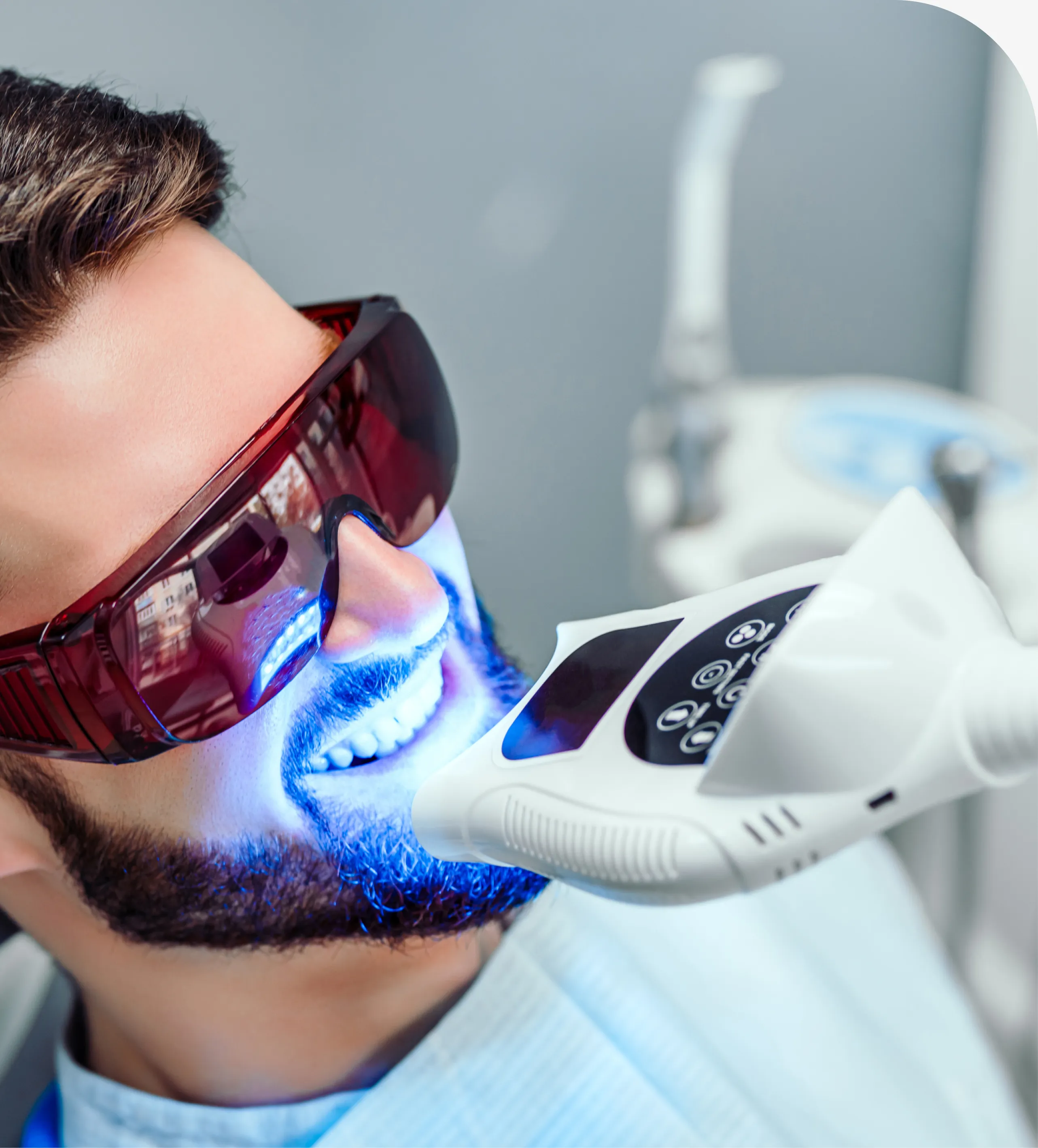
A professional-strength whitening gel is applied in short, timed cycles. Our dentist may repeat applications to reach a target shade, checking progress between cycles. Some systems use a curing light to activate the gel, while others rely on chemistry alone. Most visits take about 60 to 90 minutes from start to finish.
After the final application, the gel and barriers are removed. You will see the new shade immediately under natural lighting and compare it to a shade guide. Post-care instructions help maintain the result.
What to Expect Before and After Whitening
Before treatment, a cleaning and exam are helpful to remove surface buildup and rule out issues like cavities or gum inflammation. If you tend to have sensitive teeth, let the team know so they can use desensitizing strategies.
- Mild, temporary sensitivity is common and usually resolves within 24 to 48 hours.
- A “white diet” for 24 to 48 hours helps prevent new stains while pores in enamel settle.
- Touch-up options include take-home trays or periodic in-office maintenance.
- Results can last from several months to a few years, depending on diet and habits.
- Good home care and regular cleanings help extend your whitening results.
If deep internal discoloration is present from causes such as certain medications or trauma, alternative or complementary options may be recommended. These can include take-home whitening with custom trays, internal bleaching for non-vital teeth, or cosmetic restorations for teeth that do not respond to bleaching alone.
Who Is a Good Candidate?
- Adults with healthy teeth and gums seeking a brighter shade.
- Patients with extrinsic stains from foods, drinks, or tobacco.
- Individuals without untreated cavities, cracks, or active gum disease.
- People who understand that crowns, veneers, and fillings will not whiten.
Safety and Sensitivity Overview
When performed under dental supervision, whitening is considered safe for enamel. Sensitivity can occur because the gel temporarily opens microscopic enamel tubules. Desensitizing agents, shorter gel intervals, and fluoride varnishes can reduce discomfort. Always share your sensitivity history so the approach can be tailored to you.
Frequently Asked Questions
Our team first isolates your gums, applies a professional-strength gel, and activates or times the gel in several cycles. Stain molecules are oxidized, revealing a lighter tooth shade.
Most patients see several shades of improvement, though results vary by enamel type and stain depth. Our dentist will compare before-and-after shades to document change.
Many patients enjoy brighter teeth for 6 to 24 months. Coffee, tea, red wine, and smoking can shorten longevity. Touch-up whitening helps maintain the shade you prefer.
Yes. Research shows that dentist-supervised whitening is safe when used as directed. Temporary sensitivity is possible and can be managed with desensitizing care.
No. Whitening only brightens natural enamel. If mismatched shades appear after whitening, options may include replacing older restorations that show in the smile.
Let the team know before treatment. Strategies such as lower-concentration gel, shorter exposure, and fluoride or potassium nitrate can make the process more comfortable. For more information about in-office whitening in Royal Oak, MI,
Ready to Get Started?
Schedule Your Visit Today
Contact Royal Oak Smiles to learn more or book a consultation with our experienced team.