
Our Services
Root Canal Therapy
Root canal therapy in Royal Oak, Michigan, helps save an infected or painful tooth so it can function comfortably again. At Royal Oak Smiles, this endodontic treatment removes harmful bacteria from inside the tooth, eases discomfort, and preserves your natural smile. This page explains when the procedure is recommended, how it works, and what you can expect from start to finish.
Root Canal Therapy Explained
Inside each tooth is a soft center called the pulp, which contains nerves and blood vessels. Deep decay, a crack, trauma, or a failed filling can let bacteria reach the pulp and cause infection. A root canal removes the infected pulp, cleans and shapes the canals, and seals the space to prevent reinfection. The goal is to keep your natural tooth in place rather than removing it.
Common Signs You May Need Treatment
- Lingering sensitivity to hot or cold that lasts after the source is removed
- Throbbing or spontaneous toothache, especially at night
- Swelling, tenderness, or a pimple-like bump on the gums
- Discomfort when chewing or touching the tooth
- Darkening or discoloration of the tooth
Why Consider Root Canal Therapy?
Choosing root canal therapy can protect both your health and your bite. Many patients search for what is a root canal, how does root canal therapy work, and benefits of root canal treatment. Key advantages include:
- Pain relief by removing inflamed or infected pulp tissue
- Tooth preservation, avoiding extraction and a gap in your smile
- Restored chewing and normal biting force
- Prevention of infection spreading to the jaw or adjacent teeth
- High long-term success when followed by a proper crown
How Root Canal Therapy Works
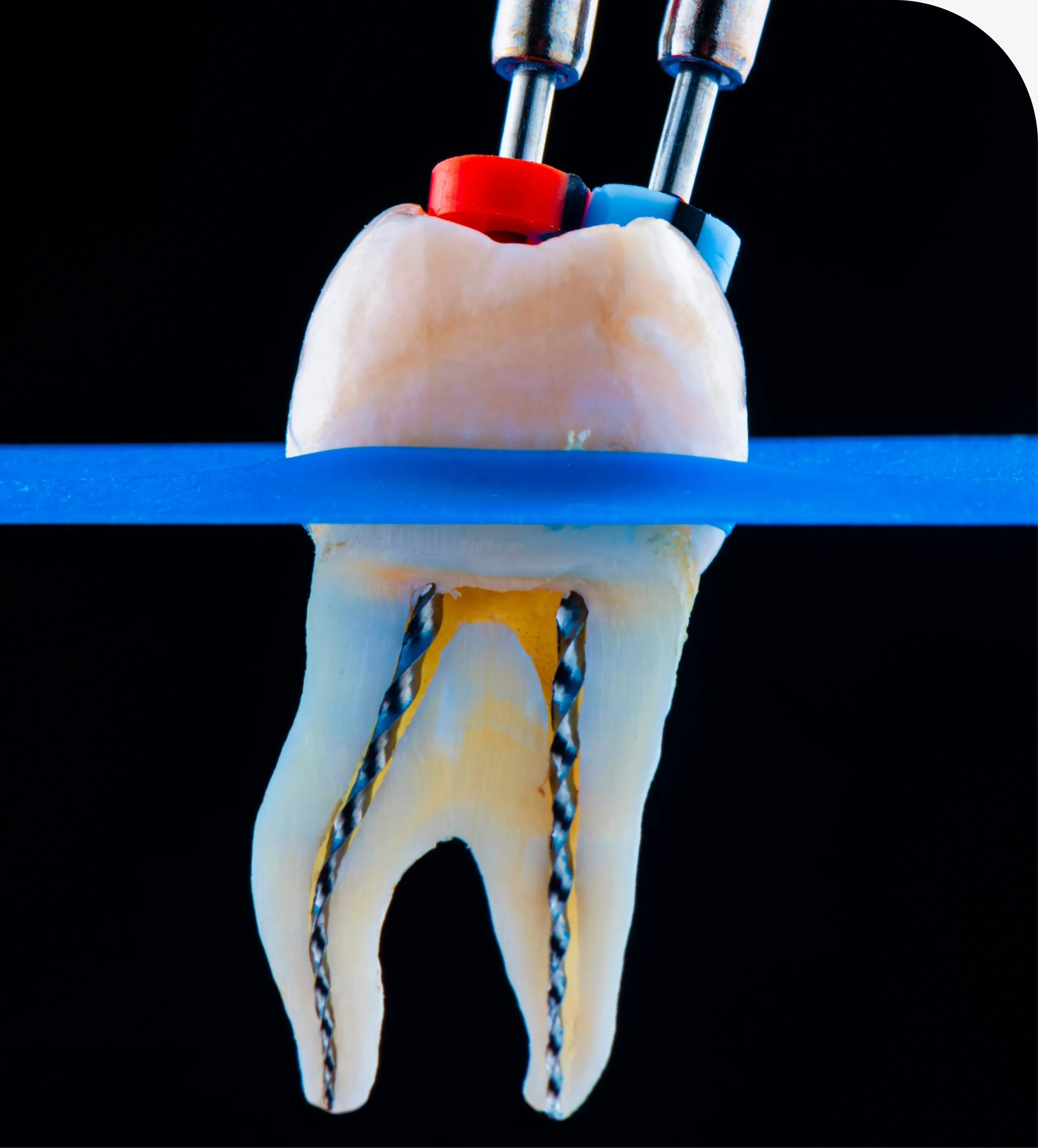
The process begins with a careful exam and an X-ray to pinpoint the infection. Local anesthesia is used so the procedure is comfortable. A thin protective sheet called a dental dam isolates the tooth. Our dentist will create a small opening to access the pulp chamber, then remove the infected tissue and shape the canals with precision instruments. After disinfecting the space, the canals are filled with a rubber-like material called gutta-percha and sealed to block bacteria. A temporary filling protects the tooth until a permanent restoration is placed.
Most back teeth need a crown after a root canal to strengthen the remaining enamel and reduce fracture risk. Front teeth may also need a crown depending on the amount of tooth structure remaining.
What to Expect Before and After Treatment
During the visit, you should feel pressure but not sharp pain due to anesthesia. Many procedures take 60 to 90 minutes, though complex cases or teeth with several canals can take longer or require two visits. Mild soreness for a day or two is common and often managed with over-the-counter pain relievers unless advised otherwise. Sensitivity usually improves within 24 to 48 hours.
Until the final crown is placed, avoid chewing hard foods on the treated tooth to prevent cracks. Good daily care remains important:
- Brush twice daily with a fluoride toothpaste
- Floss once a day around the restored tooth and neighboring teeth
- Return for the crown and follow-up as scheduled
- Call if you notice swelling, increasing pain, or the temporary filling loosens
Patients often ask about root canal recovery time. Most people resume normal activities the same day or the next, and full function returns once the permanent crown is seated.
Frequently Asked Questions
With modern anesthesia, the procedure is designed to be comfortable. Many patients report the pain from the infection is worse than the treatment itself, and relief follows soon after care.
Most appointments last about 60 to 90 minutes. Teeth with complex anatomy or severe infection may need a second visit for thorough cleaning and sealing.
Back teeth almost always need a crown for strength. Front teeth may or may not need a crown depending on remaining tooth structure and bite forces.
Saving a natural tooth often protects your bite and jawbone and avoids the cost and time of replacing a missing tooth. Extraction may be considered when a tooth is too damaged to restore.
Antibiotics alone do not remove infected pulp inside a tooth. They may reduce symptoms temporarily, but definitive treatment requires removing the infected tissue through a root canal or extracting the tooth.
With a well-sealed root canal, a quality crown, and good home care, many treated teeth last decades. Regular checkups help monitor the restoration.
Ready to Get Started?
Schedule Your Visit Today
Contact Royal Oak Smiles to learn more or book a consultation with our experienced team.